

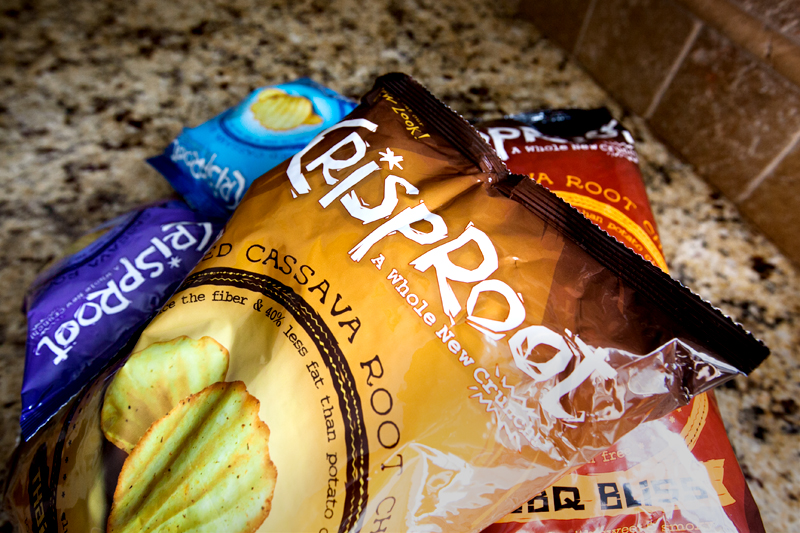
 We tried a new kind of chip this week called CrispRoot Cassava Root Chips.
What is cassava root? It actually looks quite a bit like a regular potato on the inside, though the exterior of a cassava root is darker, covered with a rind similar to tree bark, and the overall vegetable is longer and skinnier than a typical potato.
Cassavas are also known as tapioca or yuca and can grow in very dry conditions, making it a perfect crop for areas prone to drought. It is widely used in the tropics (South America) in dishes similar to what we would use potatoes for here in the States.
I admit that I had never heard of cassava before trying these chips, so I had fun doing a little research to learn more about this closely-related cousin to the potato.
Why is a cassava better than a potato? They are both starchy root vegetables, but cassava contains twice the fiber. They also contain a compound known as saponins, which act as a natural steroid. Saponins are known to help reduce inflammation of the joints, and the compound is often found in formulas for drugs used to treat arthritic and rheumatoid conditions. It's also been reported that cassava has the ability to break up minerals and inorganic deposits, making them helpful for kidney stones, gall stones, or even calcification of the joints. Finally, it's been stated that consuming cassava root helps promote healthy bacteria in the digestive track and helps inhibit the growth of the bacteria you don't want flourishing in those areas.
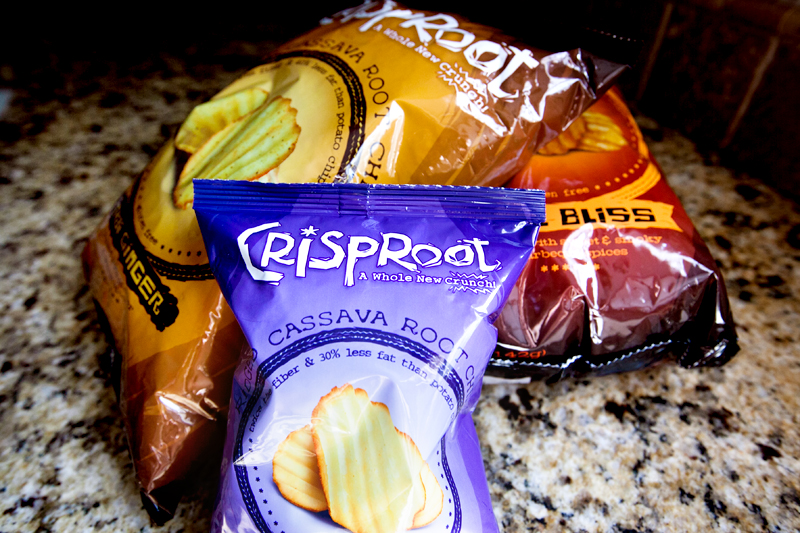 So now let's get to the chips in particular! I'm no stranger to chips made with vegetables other than potatoes, so I'm always happy to try a new product that'll give me that same satisfying crispy crunch of a typical chip. And let's be honest, we're all on the lookout for healthy chips. CrispRoot chips come in four flavors, Original, Sea Salt, BBQ Bliss, and Thai Ginger. These are gluten free chips with no dairy, wheat, yeast, or casein.
Overall Nutritional info: A serving (23 chips) contains 150 calories, 18g Carbohydrates, 1g of Protein, between 6-7g of Fat, between 3-3.5g of Saturated Fat, between 0 and 1g of Sugar, and between 150-180 milligrams of Sodium.
So, they do have a little bit less fat than a typical fried potato chip, which contains 10g of fat per serving, but they do have more saturated fat (other potato chips run at about 1.5g of saturated fat per serving). After reading the label, I'm gonna take a guess that the increased saturated fat is due to the use of palm oil. There are debates galore on whether palm oil is a "better substitute" for other saturated fats, but I won't bore you with any of that info. You can hit up da Google and form your own opinions.
The big difference that I noticed is found in the ingredients list. As an example, here is the ingredient list from the Sea Salt flavor, taken directly from the CrispRoot website:
INGREDIENTS: Cassava, palm or sunflower or safflower oil, sea salt, natural vitamin E to preserve freshness. Contains soy.
Looks pretty good to me! A nice short ingredient list with nothing that I can't pronounce. So, let's dig into these things and see how they taste.
Overall Impressions: I loved the colorful, quirky packaging, making it quick and easy to identify each flavor. The chips themselves are ridged and sturdy, making them well-suited for dipping! They have a great texture and a great crunch, and they don't leave any greasy residue on your fingers while eating. Because of the sweeter nature of the cassava root, I found each flavor to have sweet undertones that were enhanced by some of the seasonings on each variety, so that was a nice touch as well.
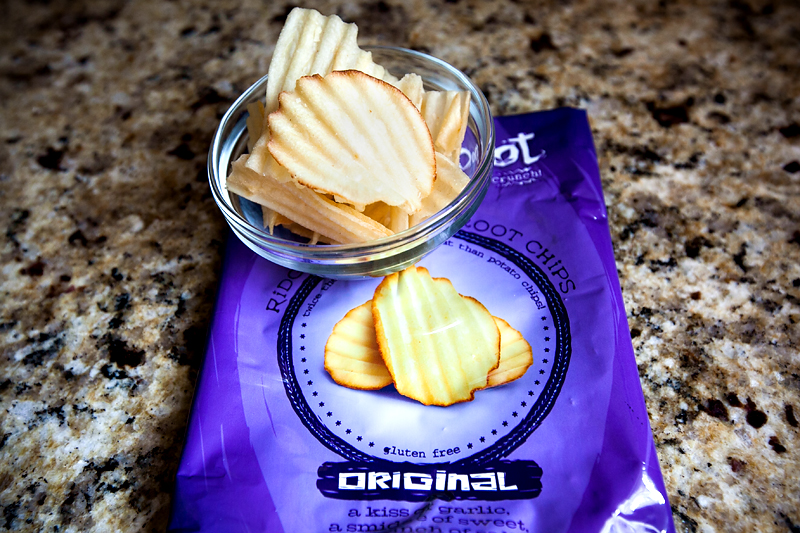 The original flavor contains, reading straight from the packaging, "A kiss of garlic, a smidge of sugar, and a pinch of salt." I like that this flavor is separated from the sea salt version, as it doesn't have an overpoweringly salty taste. To me, the slight sweetness came through more than anything else, and felt pretty unique to me. It'd be nice paired with a tangy sweet sandwich or something similar.
CrispRoot Cassava Root Chips - Original Flavor -  4 out of 5 (Buy this flavor)
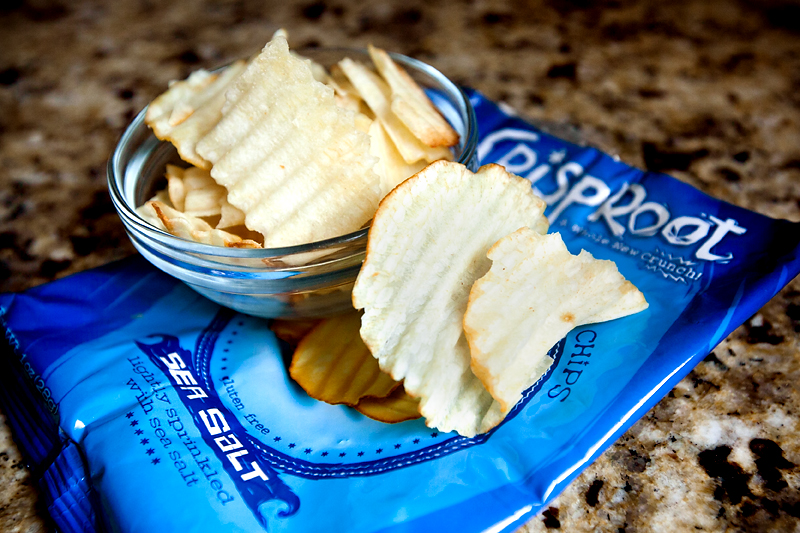 The sea salt flavor adds a bit more of that salty crunch expected of a potato chip, and I enjoyed this one quite a bit. A simple, no frills (okay, so there are ridges, but no frills! 🙂 ) chip!
CrispRoot Cassava Root Chips - Sea Salt Flavor -  4.5 out of 5 (Buy this flavor)
 Next was BBQ Bliss. This one is described as a mixture of sweet and smoky BBQ with brown sugar, chilies, and other spices such as onion, garlic, and paprika. I appreciated the combination of the sweet and the smoky and thought that both of those flavors came through in a nice balance, though the sweet side was just a tad bit stronger to me. I enjoyed the barbecue flavor overall, as it didn't have the wholly fake taste that many other BBQ chips have. My only wish is that it had a bit more punch to it. Though the flavors are good, they were pretty mild overall.
CrispRoot Cassava Root Chips - BBQ Bliss - 4 out of 5 (Find a possible retailer for this flavor)
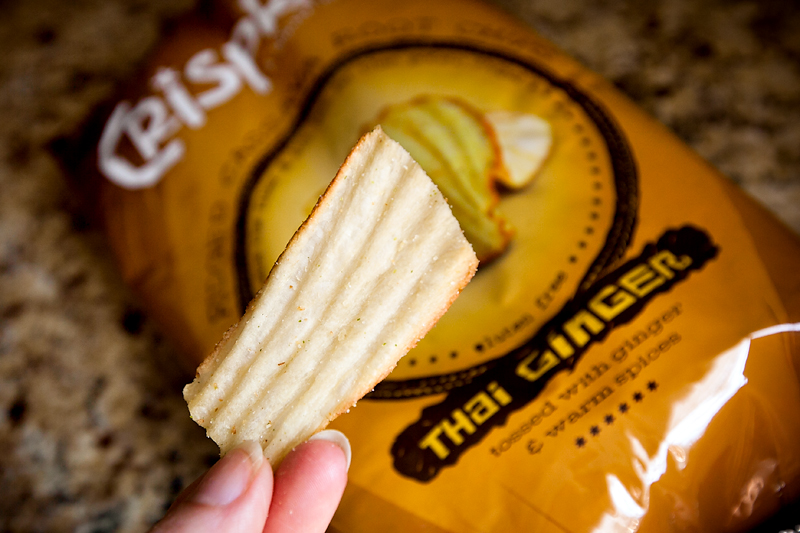 We saved Thai Ginger for last, because it sounded so unique! "Tossed with ginger & warm spices". I enjoyed the fact that this is a variety not often seen in a snack chip, but again, I found the overall flavor needing more punch. The ginger isn't on full display from the first bite, but rather hits your taste buds a little later and lingers around for a moment, as ginger is apt to do. This one would be great paired with Asian or hummus dips.
CrispRoot Cassava Root Chips - Thai Ginger - 4 out of 5 (Find a possible retailer for this flavor)
------------------------------------------------------------------------------
Find Out More: You can find CrispRoot on Facebook or you can find out more information about their products and where to buy them by visiting their main website.
Disclosure: We’re dedicated to honest, unbiased reviews. View our product review information right here!

Remi
Interesting...